Suomi
Suomi

Bolts & Nuts
Cold Air Intake, where the tuning starts.
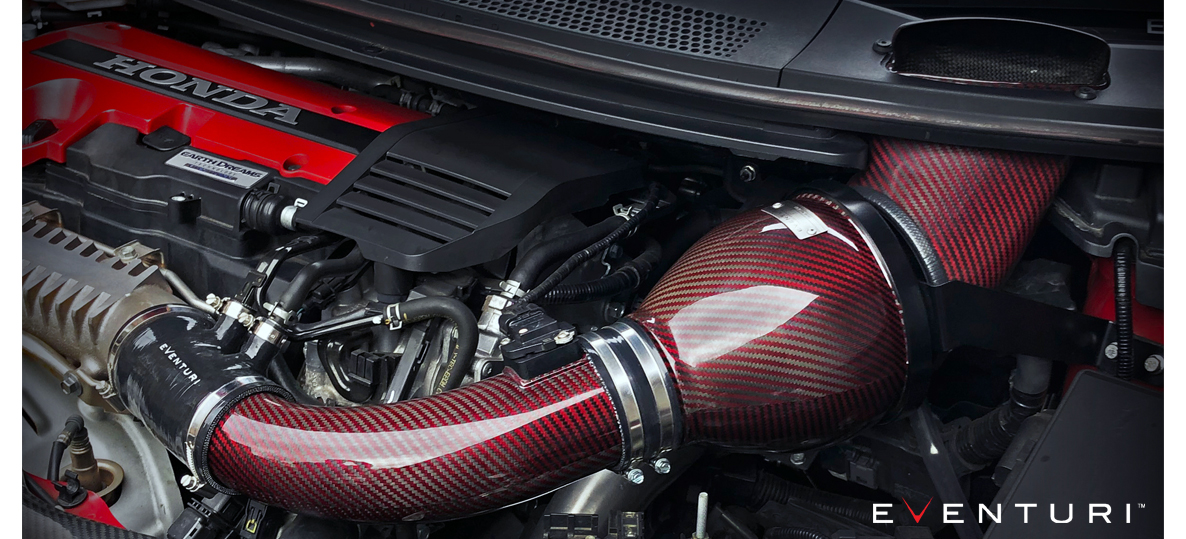
Cold Air Intake systems — expensive decorations or real performance upgrades?
Cold air intake technically refers to a system where the intake duct is modified to draw cooler air from the front of the car, but the term is also commonly used for intake kits that simply flow more freely than the factory setup.
There are many styles, ranging from higher-flow panel filters that replace the original paper filter, all the way to full systems that relocate the air filter toward the front bumper to take advantage of incoming airflow.
Ironically, many kits on the market would be better described as HOT air intakes if they consist of a cone filter casually placed in the hot engine bay.
No — that’s not an urban myth.. We’ve personally run cars on the dyno where power actually increased after replacing a “performance intake” back to the factory system.
In the Futurez lineup, you’ll find carefully selected systems we confidently consider true upgrades over stock components.
Browse vehicle-specific intake systems here, or jump directly to our most popular brands that we also keep extensively in stock.
MST Performance,
034 Motorsports,
Eventuri,
Ramair,
Blackboost
Physics lesson in a few sentences:
Cooler air contains more oxygen in the same volume. More oxygen means better combustion conditions — which means better performance.
Lower intake temperatures also reduce knock sensitivity and thermal stress on the engine → again improving both power potential and engine safety.
Anyone who’s ridden mopeds remembers how even a sluggish engine suddenly woke up after rain in cool, fresh weather.
So if airflow improves and the air is cooler — power increases even without other modifications.
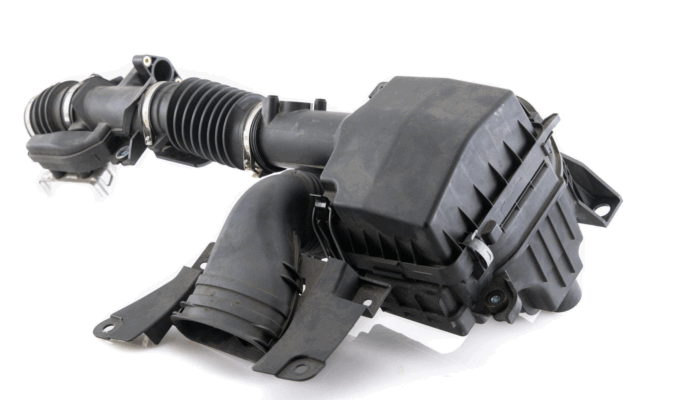
What’s wrong with the stock intake?
A factory intake system is designed as a compromise. It needs to be:
- quiet — even if we petrolheads enjoy intake sounds, the average driver usually doesn’t
- cheap to mass produce
- emissions compliant
- capable of filtering well even when service intervals stretch longer than they should
Performance is rarely the top priority.
A well-designed cold air intake removes restrictions from the intake side, resulting in:
- better throttle response
- less turbo lag on forced-induction cars
- smoother power delivery throughout the rev range
- sportier intake sound
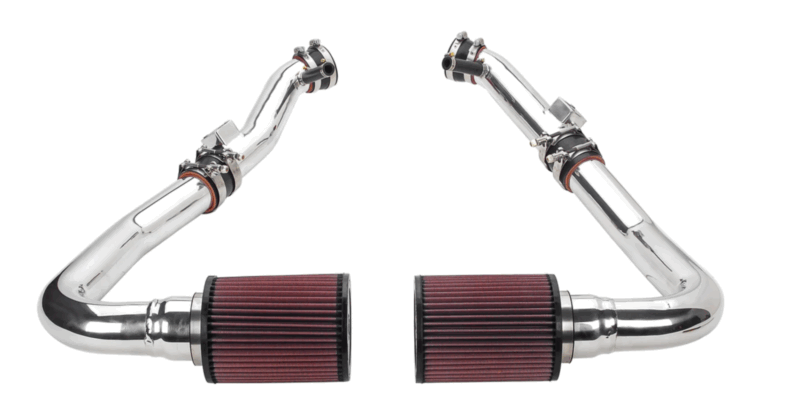
Types of intake systems
This upgrade goes by many names, and there are just as many design styles.
The most common types can be divided like this:
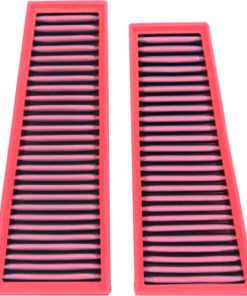
Panel filter
- Higher-flow replacement filter for the stock panel
- Fits inside the original airbox
- Modest gains compared to stock
- Often washable and reusable, meaning long lifespan
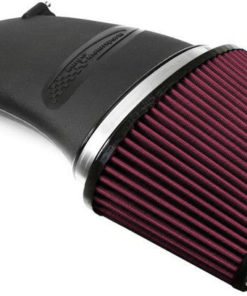
Short Ram / Open cone filter intakes
- Usually short intake pipe with an exposed cone filter in the engine bay
- Simple and affordable, good airflow
- Downside: may draw warmer engine bay air, causing heat soak in situations like waiting at lights or staging at the drag strip
- Aggressive intake sound
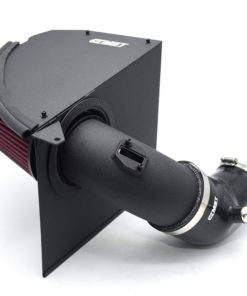
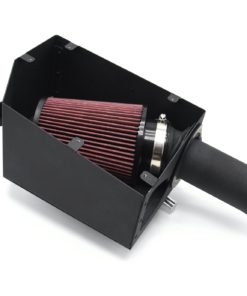
Enclosed intake systems
- Properly heat-shielded enclosed designs, engineered with airflow in mind
- Higher price, especially carbon fiber versions
- Cooler intake temperatures
- Depending on design may include a scoop that channels cool air from the front
Often the best overall option.
Cold Air Intake — front-mounted systems
- Systems where the filter or intake duct is relocated toward the grille or bumper area
- In motorsport, some setups even replace a headlight for direct airflow
- Longer piping can cause minor flow loss, but intake temperatures remain very low
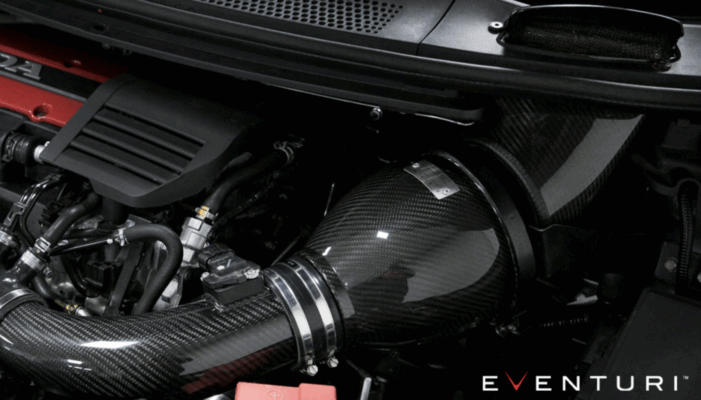
You don’t always have to go all the way to the front though. For example, the Honda Civic Type-R Eventuri intake draws air from the base of the windshield.
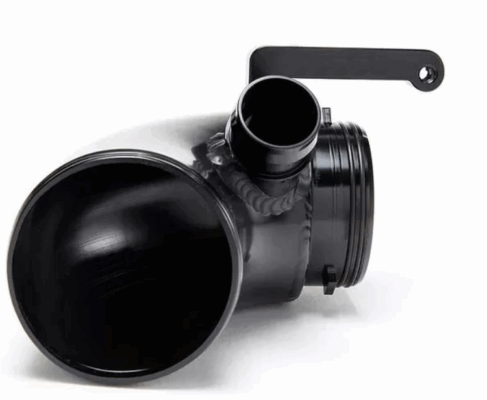
IMPORTANT: Turbo inlet upgrades
On turbocharged cars, the section between the turbo and intake system is extremely important. A restrictive inlet limits airflow and slows turbo response.
For example, the popular Audi / VW EA888.3 generation (2.0T 2013–2020) has a factory 90-degree bend leading into the turbo that can cost as much as 5–15 hp compared to a higher-flow replacement, depending on the setup.
Be careful with MAF sensors!
If your car uses a MAF sensor, you can’t just swap intake parts randomly.
The MAF measures the amount of air entering the engine, and the ECU calculates fuel delivery based on that reading. The sensor is calibrated for a very specific pipe diameter and intake geometry so it can accurately measure airflow.
If the intake dimensions change, the readings change automatically. The same mass of air moving through a smaller pipe travels faster, and through a larger pipe slower — which alters the measurement.
High-quality intake systems account for this, allowing you to install them directly in place of the factory unit without tuning issues.